
Hauptinhalt
When Research Meets Social Struggles: The Opportunities and Tensions of Engaged Scholarship in the Climate Justice Era
Public Keynote by Isabelle Anguelovski | IRS Spring Academy 2026
In this talk, Isabelle Anguelovski reflects on the opportunities and trade-offs of engaged research – research that works closely with communities, civic organizations, and public institutions to address environmental and climate injustices. Drawing on examples from her work in Barcelona and Boston (among other cities), she discusses how collaborative research can help document lived experiences of climate vulnerability, co-produce knowledge with communities, and support struggles for housing and climate justice. At the same time, Anguelovski will highlight some of the tensions that engaged researchers often face: balancing academic expectations with community needs, navigating power and positionality, and confronting the risk of extractive relationships even within well-intentioned collaborations. Ultimately, the researcher argues that engaged research requires constant negotiation between scholarship, activism, and institutional constraints. By sharing concrete examples of participatory methods, partnerships with grassroots organizations, and policy engagement, she invites researchers to think critically about how their work can contribute to social change while remaining attentive to the ethical, political, and personal trade-offs involved in this kind of research practice.
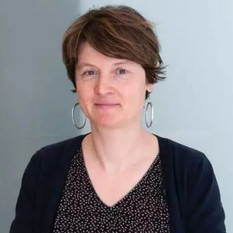
Isabelle Anguelovski is the director of the Barcelona Laboratory for Urban Environmental Justice and Sustainability (BCNUEJ), a Research Professor and a Principle Investigator at the Catalan Institution for Research and Advanced Studies (ICREA). As part of collaborative and individual international research projects, she studies how urban environmental injustice is materialized and contested. Her most current work examines the compounding environmental racisms and injustices faced by marginalized groups when exposed to climate impacts (e.g. heat, flooding), resilient infrastructures, and displacement pressures.