
Of Soil and Land – “Boden” as a neglected foundation of historical processes in the long 20th century
Research department: Contemporary History and Archive
Project Leader within IRS: Prof. Dr. Kerstin Brückweh Dr. Monika Motylińska
Project Team: Dr. Rita Gudermann Anastasia Betsa Clementina Irimină
Duration: 01/2026 - 12/2029
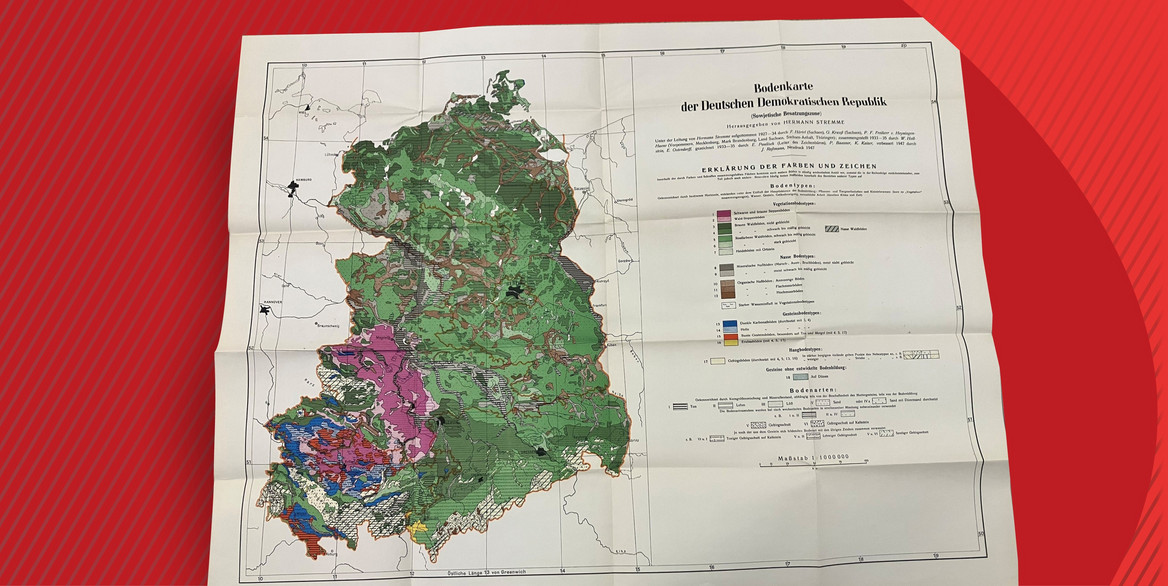
Space and Boden are inseparably intertwined. While space is now firmly anchored in the consciousness of historical research, Boden has been historiographically overlooked. One reason for this is that the German term “Boden”, has many meanings – as soil, ground and land, it has a material, a legal and political, and a cultural dimension. This complexity makes it difficult to define the term unambiguously. In addition, Boden was ideologically appropriated during National Socialism, for example, in the formula “Blut und Boden” (blood and soil), which has further complicated its scientific examination.
The project addresses Boden as a constitutive aspect of space and proposes examining it as a complex, historically shaped, and conflictual category. The analytical focus lies in the history of planning, construction, and the appropriation of space in the long 20th century. Various urban and rural areas in Argentina, southern Africa, Germany, and Romania serve as the project's case studies.
The project aims to answer four sets of questions. First, Boden is explored in its various spatial dimensions – horizontally, as a surface, and vertically, as a built or used environment. Secondly, Boden is to be further developed as a concept that establishes a meaningful connection between a relational understanding of space and the material properties of soil. Thirdly, the project analyses actors and appropriation processes that become visible through the category of Boden. Fourthly, Boden is examined as a site for the negotiation of power relations, also with a view to future developments.
In order to analyse the different historical dimensions of Boden, a digital glossary is being developed as a participatory tool. In particular, it aims to involve the community of practice surrounding the IRS's Scientific Collections. The glossary is critical-analytical and multilingual: it documents how the specifically German-language term “Boden” has been used and understood historically in different disciplines and language areas. At the same time, Boden will be translated into English to make it accessible for international discussions.