Main Content
"Collaborating with Society"
IRS Launches New Research Programme
With its new research programme, the IRS is systematically opening itself up to collaborative research with stakeholders outside the academic world. Transdisciplinary and participatory research are intended to help solve complex societal problems and strengthen trust in science.

With its current research programme “Working with Society” (2026–2029), the IRS is responding to the growing need for collaboration beyond the boundaries of academia. Climate change, social inequality, political polarisation and global crises present complex challenges to contemporary societies. Furthermore, a distance has grown between science and society in recent years – often accompanied by a loss of trust. Added to this is the fact that crises overlap, creating a state of perpetual crisis. Many of these problems transcend disciplinary boundaries – and they cannot be addressed within the scientific system alone.
That is why the IRS is taking a step further with its current research programme: it not only studies social change but also shapes the research process in collaboration with social actors. The research programme views research as an open learning process – in dialogue with practice, politics, civil society and citizens.
The focus is on participatory and transdisciplinary research approaches:
- Participatory means: people outside academia actively contribute their knowledge, experiences and perspectives to the research process.
- Transdisciplinary means: research questions, methods and solutions are developed jointly – on an equal footing between academia and societal actors
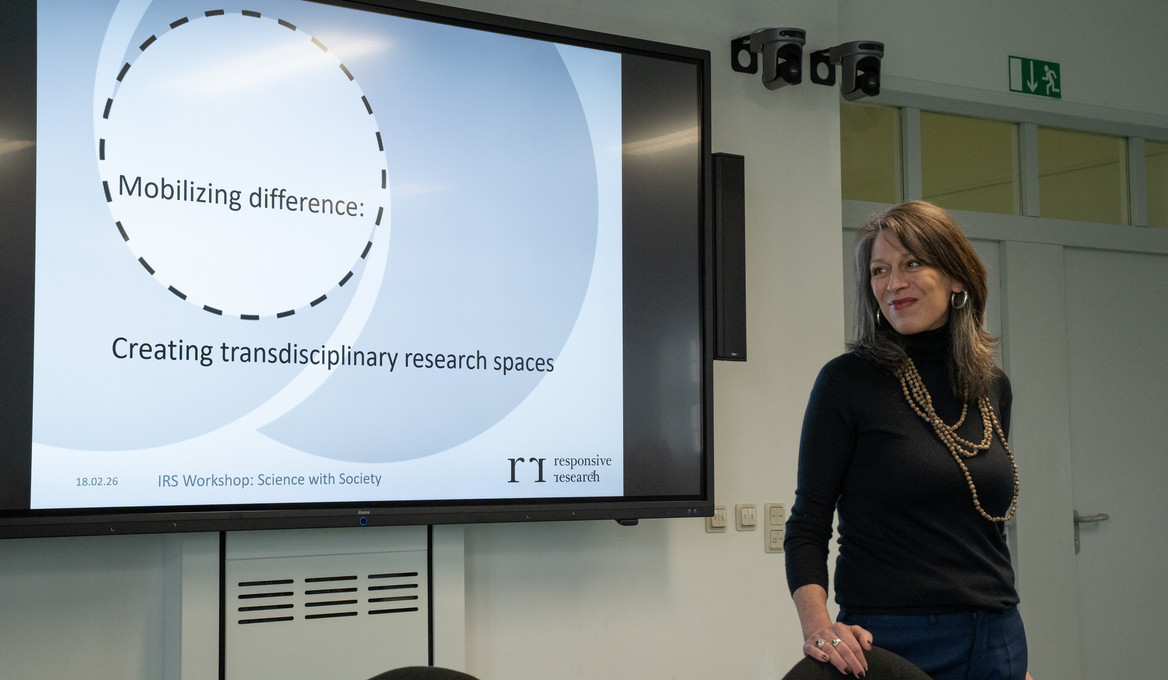
Three flagship projects – three perspectives
Over the next four years, the IRS will integrate transdisciplinary and participatory approaches more systematically into its research than has previously been the case. The framework for this is provided in particular by the institute-funded flagship projects of the three research priorities. They examine social change whilst simultaneously opening up avenues for transdisciplinary research:
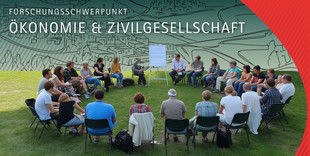
- The research focus area “Economy and Civil Society”, with its flagship project “Caring – Valuing – Transitioning”, focuses on alternative economic models. These emerge in response to societal crises. Together with mission-driven organisations, such as cooperatives, the flagship project investigates how these organisations reconcile different ideas of value and how they can contribute to societal transformation.
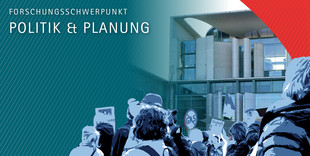
- The research focus “Politics and Planning”, through its flagship project “Urban Heat Transition”, examines the link between the housing and climate crises. For these two crises are interconnected, just as their potential solutions are. The flagship project therefore builds bridges between previously separate fields of research and brings together practitioners from housing and climate policy to engage in dialogue. The aim is to arrive at an integrated understanding of the problem from both an academic and a practical perspective.
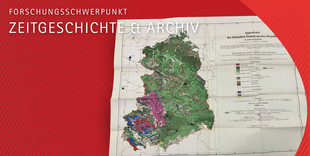
- The research focus “Contemporary History and Archives” explores, in its flagship project “History from Below – revisited”, the concept of land as an open, historically shaped and conflictual category that has hitherto been neglected in historical research. The project is compiling a glossary on the multifaceted meanings and uses of the term. The glossary is intended to function as a digital tool. The community of practitioners associated with the research collections is being involved in its development in a participatory manner.
At the same time, the IRS has established formats for the continuous exchange of ideas and experiences within the institute and with the international research community. Twice a year, researchers from the three research priorities meet with international experts in transdisciplinary and participatory research in international forums to learn from one another. In more workshop-style event formats, the IRS organises internal exchange between the research priorities on methods, new ideas and joint projects.
Scientific quality remains central to all of this. At the same time, we are expanding the forms of knowledge production and reflecting on them.
The aim
“Working with society” is more than a research programme – it is an institutional learning process. In the coming years, we aim to develop new formats, test methods and strengthen collaborations. The goal is a form of scholarship that remains academically excellent whilst being more closely connected to society.