
Research Group

Urban Politics

The Research Group focuses on how political processes, negotiations and inequalities manifest in the planning of cities. Comprehending cities as political arenas, our research revolves around global themes such the financialisation of urban development, socio-spatial disparities and international migration. Taking an actor-centred perspective on urban politics, the group’s current interests are in the changing nature of urban governance arrangements. Across the world, we witness urban conflicts that call into question established assumptions about cooperation and network-based partnerships in the governing of cities. Thus, the group’s research is concerned with the ways in which these challenges require new approaches to the study of planning and decision-making processes in cities.
Ongoing Projects

This Lead Project examines the intertwining of the housing and climate crises. Using the example of the urban heat transition in Germany, it questions the apparent contradiction between the provision of affordable housing and the climate-friendly construction and operation of apartments. Building on insights from climate governance, housing research, and planning theory, it promotes transdisciplinary dialogue with actors who are committed to a socio-ecological urban heat transition. more

Das Teilprojekt „Contestation over Property Regimes and Housing: (Un)doing Commodified Urban Land Ownership in India and Germany” im Rahmen des DFG-Sonderforschungsbereichs “Strukturwandel des Eigentums” widmet sich den rechtlichen und alltäglichen Formen der Herausforderung privater Eigentumslogiken in Indien und Deutschland. Michael Schwind und Dr. Lisa Vollmer bearbeiten am IRS die deutsche Fallstudie und untersuchen die zunehmende Mobilisierung des Rechts durch zivilgesellschaftliche Gruppen in der Auseinandersetzung mit dem vorherrschenden privaten und kommodifizierten Bodeneigentumsregime. more

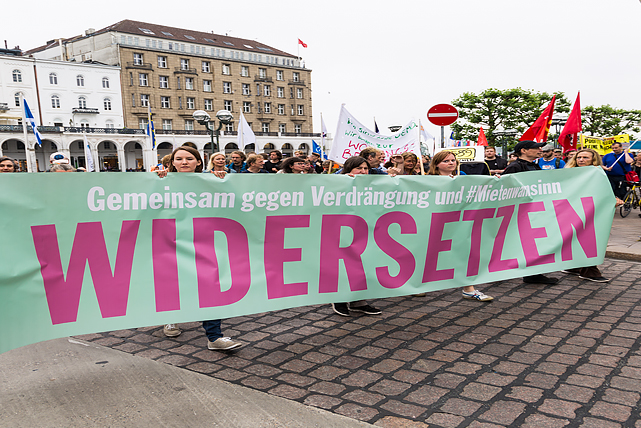
Whether it is protests against large-scale projects such as Stuttgart 21, wind turbines or development plans in growing cities: Spatial planning is increasingly confronted with conflicts. In this context, the classic forms of citizen participation are reaching their limits. The aim of this project is to further develop existing planning theories by distinguishing between rational, communicative and agonistic - i.e. conflict-related - types of planning in dealing with conflicts and by examining planning conflicts using empirical case studies in practice. more