
Main Content
New Research Agenda for Local Climate Action
Publication in Honour of Environmental Policy Researcher Kristine Kern†
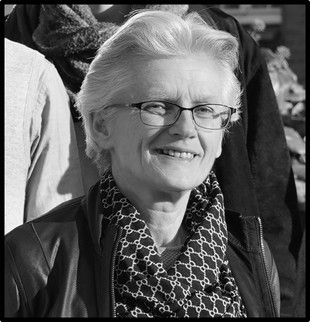
The scorching summer of 2026 has starkly demonstrated just how important climate action and adaptation are at local level. One of the first researchers to focus on climate action at the local level was Kristine Kern, who headed the “Urban Sustainability Transition” Research Group at the IRS. She died unexpectedly in February 2025. A forward-looking research agenda based on her work has now been published.
An international team of authors led by Kristine Kern’s long-standing colleague Harriet Bulkeley (Professor at Durham University, United Kingdom) pays tribute to Kristine Kern’s work in an agenda for future research into local climate policy. Co-authors of this article include Wolfgang Haupt (IRS) as well as Elisa Kochskämper and Peter Eckersley (formerly of the IRS).
Agenda with five new thematic areas
The new research agenda, which highlights the response to climate change in smaller local authorities and rural areas, was published in summer 2026 in the international specialist journal npj Climate Action. Whilst previous research efforts have often targeted large and internationally well-connected cities, the focus is now set to shift increasingly towards smaller municipalities and rural areas. The aim is to engage a larger section of society in local climate action measures. According to the German Association of District Authorities (Deutscher Landkreistag), around 68 per cent of the population in Germany lives in municipalities within a district.
Building on the pioneering work of Kristine Kern, the authors identify five areas for future research:
- Developing a better understanding of smaller local authorities – which are often highly heterogeneous – and how they operate, as their functioning frequently differs from that of large cities;
- Climate policy and governance innovation at the local level, including the role of particularly committed political actors (so-called policy entrepreneurs);
- Financial capacities for and fiscal aspects of local climate action;
- Multi-level dynamics and the way in which they influence smaller municipalities;
- Smaller and local networks for climate action.
- The institutionalisation of local climate action beyond precarious ‘project-based’ approaches, as well as inter-municipal exchange and cooperation across municipal boundaries.
In the authors’ view, all of this can best be achieved through collaborative research approaches, such as those that characterised Kristine Kern’s working methods and attitude. She combined meticulousness, dynamism and inspiration with a keen eye for practical implementation.