Main Content
New AI Atlas: Superstar Cities and Lagging Industrial Centres
IRS Analysis Reveals Significant Regional Disparities in AI Innovation Capacity
Germany is competitive in artificial intelligence research, mid-table in terms of application, and lagging behind in growth and funding. At the same time, AI innovation capacity is geographically concentrated in a few centres: Berlin and Munich are the key locations for AI start-ups and venture capital, whilst a large proportion of the computing infrastructure is located in the Rhine-Main region. Nevertheless, there are opportunities to catch up – both for Germany as a whole and for regions that are lagging behind. This is shown by the new AI Atlas published by the Leibniz Institute for Research on Society and Space (IRS).
Previous analyses of AI innovation capacity have mostly focused on individual indicators at national level. However, they provide only limited insight into where Germany’s strengths and weaknesses lie, and how different sectors of the AI economy relate to one another geographically. Economic geographer Andreas Kuebart from the IRS has therefore, for the first time, collated and analysed data from numerous sources on AI research, start-up activity, funding, models, applications and infrastructure in Germany. His atlas maps the AI sector from basic research right through to commercial application, thereby highlighting different regional developments.
Three key findings:
Major gaps in autonomy and model development: When it comes to AI, Germany is reliant on non-European, particularly American, providers throughout the entire value chain – from cloud infrastructure to growth capital. Whilst Germany is in a relatively strong position when it comes to AI usage, it plays hardly any role in the development of high-performance models. The economic potential of Germany’s excellent AI research is not being fully realised. Talent and companies are migrating abroad, particularly to the US.
Focus on ‘superstar’ clusters: Berlin and Munich attract the lion’s share of AI start-ups and venture capital. In terms of venture capital invested, Munich is well ahead, accounting for 4.5 out of 11 billion euros invested in AI nationwide between 2021 and 2025. Most AI start-ups are based in Berlin, where around 700 of Germany’s 2,300 start-ups were located by the end of 2025. By contrast, large parts of Germany remain disconnected, including traditional industrial centres such as Stuttgart and the Ruhr region. Only a few flagship universities generate a significant number of research-based spin-offs – the Technical University of Munich is far ahead in this respect. Computing power, on the other hand, is concentrated at the German internet hubs in the Rhine-Main region.
The SME gap: Large enterprises make extensive use of AI, whilst SMEs are lagging behind. Only 23 per cent of small and 36 per cent of medium-sized enterprises use at least one AI technology. The potential of automation and data-driven decision-making is therefore not being fully exploited. In view of rising bureaucratic burdens and the massive shortage of skilled workers, SMEs urgently need AI as a means of boosting efficiency.
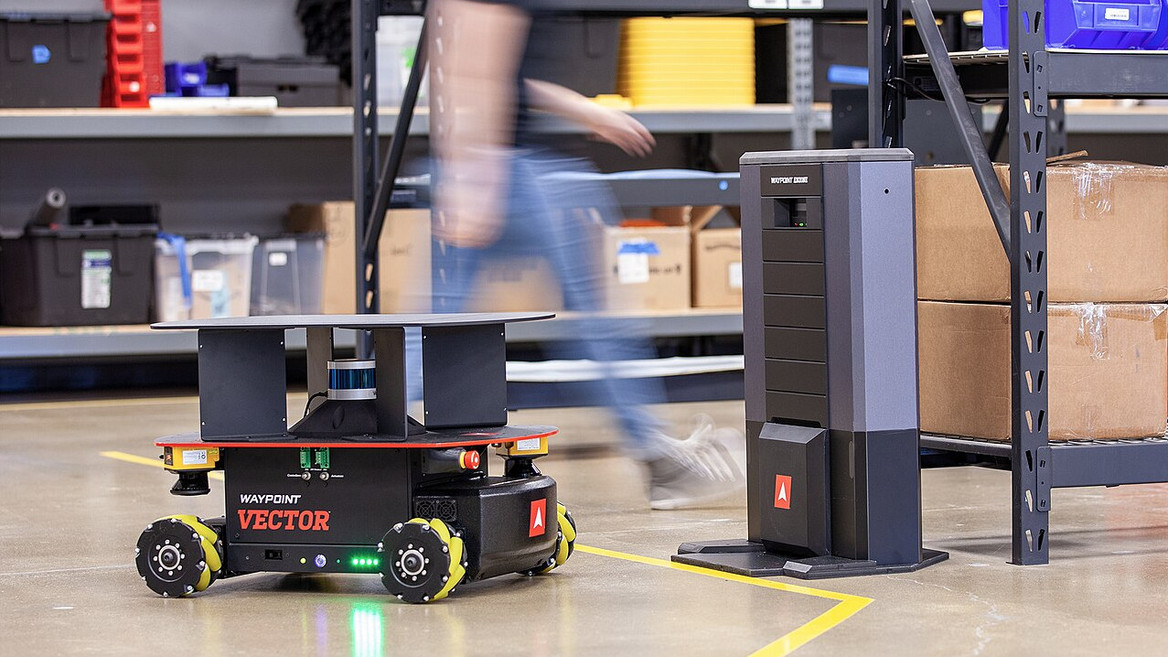
However, according to the AI Atlas, these gaps can be bridged. “The aim is not to use as much AI as possible, but to use it in a targeted manner,” says Andreas Kuebart. “Germany can build on its existing strengths in robotics and business-to-business services through specialised AI developments.” In particular, the increased use of open-source models such as the Chinese Kimi K3 – which are almost on a par with the American Frontier models – could help combat technological dependence. What is also needed is a needs-based expansion of data centres and a joint European effort to secure more growth capital.
The AI Atlas was published as a research report in the institute’s own publication series IRS Dialog.